
Top 5 HVAC AC Financing Options for 2026: A Detailed Breakdown
Last updated: 2026-11-25
When the summer heat turns your living room into a sauna, the last thing anyone wants to face is a massive, unexpected repair bill. An air conditioning system is a major investment, and finding the right way to pay for it can make or break your budget for the rest of the year. A sudden compressor failure or a cracked heat exchanger doesn’t just cause discomfort; it creates an immediate financial crisis that demands a quick response.
Choosing the right lender isn’t just about finding the lowest number on a piece of paper. You need to weigh how fast the cash arrives, how much it will impact your credit score, and whether the lender’s requirements align with your current financial standing and long-term goals. For instance, a low monthly payment might look attractive on a brochure, but if that loan spans seven years, you could end up paying double the actual cost of the unit in interest alone. Understanding the nuances of interest rates, term lengths, and approval criteria is essential before you commit to a financing plan.
- JetzLoan
- PNC Bank
- Service Loans
- First Citizens Bank
- PersonalLoans.com
How These HVAC Financing Options Were Evaluated
The selection process focused on how quickly a homeowner can move from a broken unit to a cool home. Speed is often the most critical factor when a furnace or AC unit fails during a heatwave or a deep freeze. We looked at how quickly funds are deposited and how simple the application process feels. A delay of even three days can mean a household is without temperature control during extreme weather, which can pose risks to children, the elderly, or pets.
Beyond speed, the evaluation considered the accessibility of funds for different credit profiles. Some lenders are built for those with pristine scores, while others are designed to help people rebuild their credit. We also looked at the maximum loan amounts to ensure they cover the high cost of modern HVAC installations. A basic split-system replacement can easily run between $5,000 and $15,000, while whole-home solutions involving ductwork repair and smart thermostats can push those costs well beyond $20,000. We ensured our list included options that accommodate both emergency repairs and full system upgrades.
| Lender Name | Loan Amount Range | Funding Speed | Credit Impact | Best For |
|---|---|---|---|---|
| JetzLoan | $500 – $35,000 | As little as 24 hours | No hard credit pull | Fast, quick decisions |
| PNC Bank | See site | See site | See site | Comprehensive banking |
| Service Loans | $500 – $1,500 | See site | See site | Small, quick repairs |
| First Citizens Bank | See site | See site | See site | Long-term financial goals |
| PersonalLoans.com | $250 – $35,000 | See site | See site | Exploring many options |
The Leading Lenders for AC and HVAC Financing
1. JetzLoan

If you are staring at a broken AC unit and need money in your bank account yesterday, this is likely your best bet. The platform is built for speed, connecting users with top lenders in just a few minutes through a very simple, streamlined digital process. This is a high-tech approach designed to eliminate the paperwork-heavy hurdles of traditional banking. (jetzloan.com)
This option is particularly ideal for those who are nervous about their credit score. Because there is no hard credit pull during the initial phase, you can check your rate without any fear of seeing your score drop before you even know if you qualify. This “soft pull” mechanism allows for a “window shopping” approach to financing, where you can compare interest rates and terms with zero risk to your creditworthiness.
The digital interface is designed to be intuitive, making it possible to complete an application from your smartphone while waiting for the HVAC technician to arrive at your door. This level of convenience is a game-changer for emergency situations where time is of the essence.
Pros:
- Funds can be deposited in as little as 24 hours.
- No hard credit pull to check your rate.
- High maximum loan limit of $35,000.
- Extremely fast two-minute application process.
Cons:
- Limited to a maximum of $35,000, which might be tight for whole-home systems.
2. PNC Bank
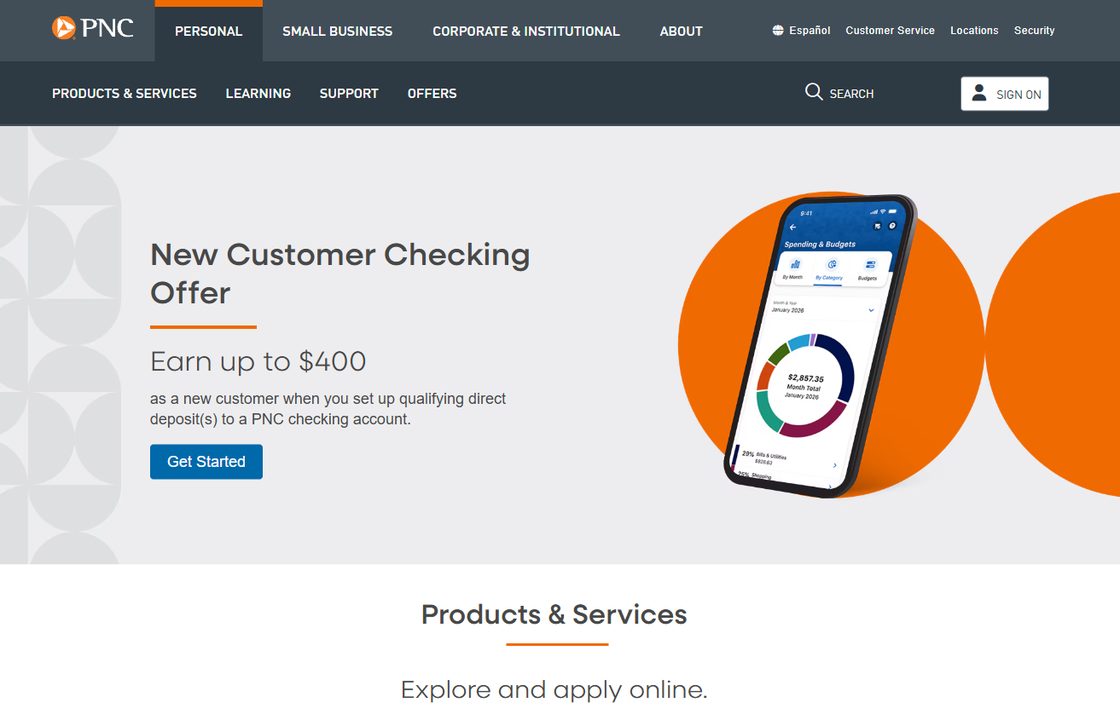
PNC Bank operates as a traditional powerhouse, offering a wide array of personal banking products. This is a great choice for people who already have a banking relationship or want a lender that offers a massive suite of financial services alongside their loan. For many, the ability to manage their loan through the same mobile app they use for their checking account provides a level of organizational ease that fintech startups cannot match.
They provide a structured environment for managing daily spending, debt consolidation, and major purchases. It is a solid, stable option for those who prefer the security and comprehensive tools offered by a large, established national banking institution. If you are looking for more than just a loan—perhaps you also want to discuss how this debt fits into your overall mortgage or savings strategy—PNC’s infrastructure is built for that level of interaction.
Pros:
- Extensive range of financial products from checking to wealth management.
- Useful online calculators and informative financial tools.
- High level of security and established banking reputation.
Cons:
- May require more traditional documentation and steps compared to fintech lenders.
3. Service Loans
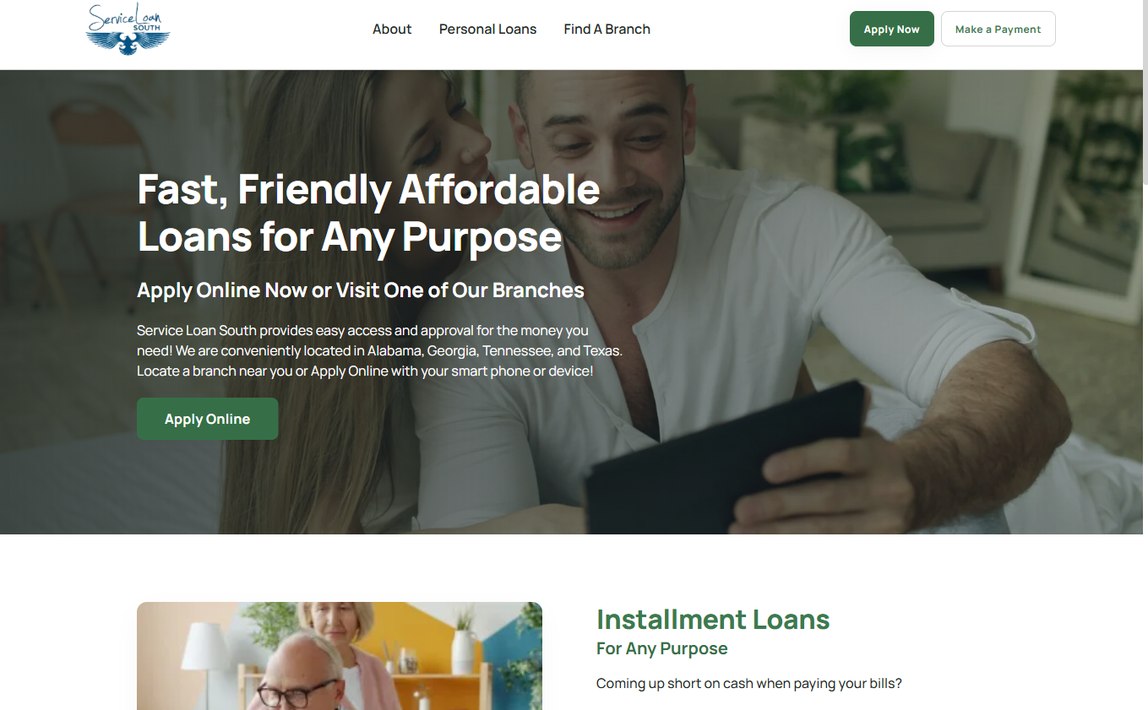
Sometimes, you don’t need a massive overhaul; you just need a quick fix to get a specific part replaced. Service Loan South specializes in these smaller, more affordable installment loans that are designed to help people stay on top of their monthly bills. For example, if your thermostat is malfunctioning or a single capacitor needs replacing, a $3,000 loan might be overkill and unnecessary for your long-term debt profile.
This lender is a great fit for residents in Alabama, Georgia, Tennessee, or Texas who need a quick infusion of cash. Because the loans are smaller, they are more accessible for people looking to manage minor household emergencies without a long-term commitment. This targeted approach helps prevent “over-borrowing,” where a consumer takes out more money than the repair actually requires, leading to unnecessary interest payments.
Pros:
- Accessible branches in Alabama, Georgia, Tennessee, and Texas.
- Loan amounts specifically designed for smaller needs ($500–$1,500).
- Helps users rebuild and maintain their credit through timely payments.
Cons:
- Lower loan limits may not cover a full HVAC system replacement.
4. First Citizens Bank

First Citizens Bank approaches financing from a holistic perspective, focusing on your entire financial journey. They are built to support various ambitions, whether you are saving for a future goal or managing complex financial lives as your wealth grows. They understand that an HVAC system isn’t just a repair; it’s an investment in your home’s value and your family’s comfort.
This is a sophisticated choice for homeowners who view their HVAC upgrade as part of a larger long-term investment strategy. They offer a variety of products that allow you to manage money, save, and finance dreams all under one roof. If you are a homeowner planning a major renovation that includes both a new AC unit and a kitchen remodel, First Citizens provides the structural depth to handle those multi-faceted financial needs.
Pros:
- Supports various life stages from basic banking to wealth management.
- Offers high-yield options like CDs for those looking to grow savings.
- Strong focus on security and protecting investors from scams.
Cons:
- May be more geared toward established banking customers rather than quick-fix borrowers.
5. PersonalLoans.com
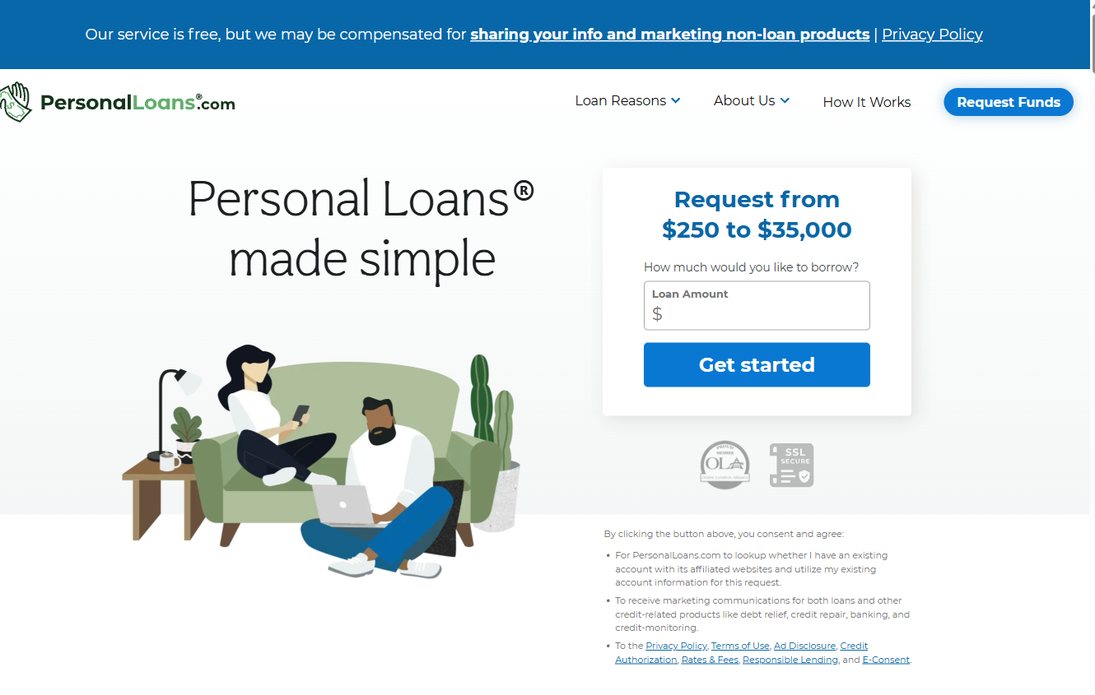
This service acts as a bridge, helping you navigate the crowded landscape of personal loans. It is a free service that allows you to see what is out there without being hit with upfront costs or hidden fees that often plague the industry. Instead of calling ten different banks, you can use this platform to get a broad sense of your eligibility and the potential terms available to you.
It is an excellent starting point for someone who wants to see a wide variety of options. If you aren’t sure which lender will give you the best terms, using a service like this can provide a broad overview of your potential funding. It acts as a comparison engine, stripping away the marketing noise to show you the raw numbers you need to make an informed decision.
Pros:
- Free to use with no upfront costs or hidden fees.
- Covers a wide range of loan amounts from $250 to $35,000.
- Simplifies the process of finding the right funding for your specific needs.
Cons:
- The service may share your information with third-party marketers.
Understanding the Real Cost of HVAC Financing
Before you sign anything, you must look closely at the total cost of the loan. It is easy to get caught up in the monthly payment amount, but the total amount paid over the life of the loan is what truly matters for your wallet. To compare two loans effectively, you must calculate the “Total Cost of Ownership.”
Consider this example: Loan A offers a $5,000 loan with a $150 monthly payment for 48 months. Loan B offers a $5,000 loan with a $100 monthly payment for 72 months. While Loan B looks “cheaper” on a monthly basis, you will end up paying $7,000 total for Loan B, compared to $7,200 for Loan A. In some extreme cases with high interest rates, a longer term can lead to paying for the unit twice over. Always ask for the “Total Repayment Amount” before signing the contract.
Another critical factor is the interest rate structure. Most personal loans for HVAC repairs are fixed-rate, meaning your payment stays the same. However, if you encounter a variable-rate loan, your monthly payment could increase if national interest rates rise. In a volatile economy, a fixed-rate loan provides much-needed predictability for your monthly household budget.
Steps to Prepare for an HVAC Loan Application
Securing a loan quickly requires preparation. If your AC fails, you don’t want to be hunting for paperwork while your house swelters. Having these items ready can shave hours—or even days—off the approval process:
- Proof of Income: Have your last two pay stubs, W-2 forms, or 1099s digitized and ready to upload. If you are self-employed, have your most recent tax returns handy.
- Identity Verification: A clear photo of your driver’s license or passport is standard for all digital lenders.
- Detailed Quotes: Before applying, get at least two written estimates from HVAC contractors. This ensures you aren’t borrowing $10,000 when a $7,000 repair would have sufficed. It also provides the lender with proof of the specific purpose of the loan.
- Debt Overview: Know your current monthly debt obligations (car loans, student loans, credit card minimums). Lenders use your debt-to-income (DTI) ratio to determine how much more you can safely borrow.
One common mistake is rushing into a high-interest loan just because the approval is instant. While speed is vital when the AC is broken, taking a few extra minutes to compare a few different offers can save you hundreds, or even thousands, of dollars. A 2% difference in interest might seem negligible on a small purchase, but on a $15,000 HVAC installation, it can represent a significant amount of money over time.
Always check if there are any prepayment penalties. If you get a bonus at work or a tax refund and want to pay off your HVAC loan early to save on interest, you want to make sure the lender won’t punish you for being responsible. Many modern fintech lenders have eliminated these fees, but older, traditional institutions may still include them in the fine print.
Finally, ensure that the loan amount you are requesting actually covers the full cost of the installation, including labor and taxes. There is nothing worse than paying off a loan for a new AC unit only to realize you still owe the technician for the installation work. I recommend adding a 10% “buffer” to your requested loan amount to account for unexpected issues discovered during the installation process, such as old wiring that needs upgrading or unexpected ductwork repairs.