
The Top 6 Flooring Financing Options for Home Renovations in 2026
Last updated: 2026-11-25
Renovating a home is a massive undertaking that often leaves homeowners staring at a growing pile of invoices. When the old carpet comes up and the subfloor looks bare, the sudden realization of total costs can feel like a punch to the gut. The price of premium luxury vinyl plank or high-end engineered hardwood can escalate quickly once you factor in underlayment, transition strips, and skilled labor.
Finding a way to fund these materials and labor costs is essential for staying on budget. You want to avoid that dreaded “mid-renovation cash crunch” where the project stalls halfway through. Whether you are a first-time homeowner or a seasoned flipper, the way you finance your new hardwood or tile makes a massive difference in your long-term financial health.
- FastLendGo
- Bank Iowa
- Discover
- Union Bank
- Michigan Schools and Colleges Credit Union
- Spring Bank
How These Flooring Lenders Were Evaluated
Our selection process focused on accessibility and the specific needs of residential renovation projects. Many homeowners need quick access to cash to pay contractors before the first plank is even laid. This is especially true when working with independent tradespeople who might require a deposit just to secure a date on their calendar.
We weighed speed and the ability to handle various credit profiles quite heavily. A lender that only caters to those with perfect credit scores might not be the best fit for everyone. This is especially true when unexpected subfloor repairs, such as finding water damage or uneven joists, require immediate liquidity to keep the project moving.
The goal was to identify a spectrum of options ranging from high-speed digital lenders to community-focused institutions. We looked at the breadth of products available, from simple personal loans to more complex credit lines. To provide a truly comprehensive evaluation, we analyzed several key performance indicators for each lender:
- Approval Speed: How many business days does it take from application to funds being available?
- Product Versatility: Do they offer specific terms for home improvement, or is it a generic cash loan?
- Credit Accessibility: Does the lender provide paths for those with a “fair” credit history, or is it restricted to “excellent” tiers?
- Fee Transparency: Are origination fees, processing fees, or prepayment penalties clearly disclosed upfront?
| Lender Name | Loan Amounts | Key Feature | Credit Requirements |
|---|---|---|---|
| FastLendGo | $500 – $5,000+ | Fast access for bad credit | Bad to Great Credit |
| Bank Iowa | See site | Ag & Business focus | See site |
| Discover | See site | Cash back rewards | See site |
| Union Bank | See site | Checking account bonuses | See site |
| Michigan Schools and Colleges Credit Union | $1,000 – $2,500 | Flex Loan option | See site |
| Spring Bank | See site | Nonprofit & Small Biz focus | See site |
The 2026 Flooring Financing Leaderboard
1. FastLendGo

FastLendGo works well for those sweating over a sudden repair bill. They specialize in making the borrowing process feel less like a mountain to climb and more like a quick digital transaction. It is a great match for someone needing to cover an urgent expense, like an emergency repair or a small flooring patch-up that cannot wait for a traditional bank’s two-week approval window.
This lender stands out because they do not turn their back on people with less-than-perfect credit histories. While a major national bank might automatically decline an application due to a recent dip in a credit score, FastLendGo’s structure is built for speed. Whether you need a small $500 injection to buy the final gallon of grout or a larger sum for a full room makeover, their process is designed to bypass slow-moving banking hurdles.
Pros:
- High accessibility for bad credit and fair credit scores.
- Offers specific loans for various needs like auto or roof financing.
- Quick comparison of local personal loan options.
Cons:
- Limited to specific states and specific loan amounts.
2. Bank Iowa

Bank Iowa brings a more traditional, community-rooted approach to the financial scene. While they have a heavy emphasis on agriculture and business, their presence in the sector provides a sense of stability. They are the kind of institution that values long-term relationships over quick, one-off digital transactions. They often look at the “whole person” rather than just a digital credit report.
For a homeowner looking for something more integrated into their banking life, this institution offers services that can assist with broader home equity needs. They provide a sense of local familiarity that massive digital-only lenders often lack. If you live in a region where they have a strong footprint, you might find a level of personalized service—like sitting down with a loan officer—that a mobile app simply cannot replicate.
Pros:
- Strong focus on agricultural and business sectors.
- Offers diverse financial products like CDs and Visa rewards.
- Provides localized, professional customer service.
Cons:
- Less focus on specialized personal renovation loans.
3. Discover
Discover is a powerhouse in the consumer credit space, making it a go-to for those who value rewards and a smooth digital experience. If you are planning a renovation that involves many small purchases, their credit card ecosystem is hard to beat. Think of things like various tools from a hardware store, decorative trim, or lighting fixtures.
It is a streamlined experience designed for the modern consumer who prefers managing finances through a smartphone app. The ability to check for pre-approval without hurting your credit score is a massive relief. You can walk into a flooring showroom knowing exactly where you stand without the fear of a “hard inquiry” lowering your score before you’ve even decided on a color.
Pros:
- High acceptance rate at nationwide merchants.
- Potential for cash back rewards on spending.
- Pre-approval process does not impact credit score.
Cons:
- Standard credit card interest rates can be high if not paid off.
4. Union Bank
Union Bank offers a broad suite of services that cover many different banking needs. From simple checking accounts to complex wealth management, they cover every base. For a homeowner, the ability to bundle renovation financing with primary banking is a significant convenience. Having loan payments automatically debited from your paycheck account can simplify your monthly budgeting.
They often provide enticing incentives, such as cash bonuses for opening new accounts. This makes them a strong contender for someone looking to move their entire financial life to a single institution. If you are looking to build a long-term relationship that could eventually lead to a mortgage or a home equity line of credit (HELOC), starting here can be a strategic move.
Pros:
- Wide variety of products from checking to wealth management.
- Potential for significant cash bonuses on new accounts.
- Strong online and mobile banking infrastructure.
Cons:
- May require more formal documentation for larger loans.
5. Michigan Schools and Colleges Credit Union
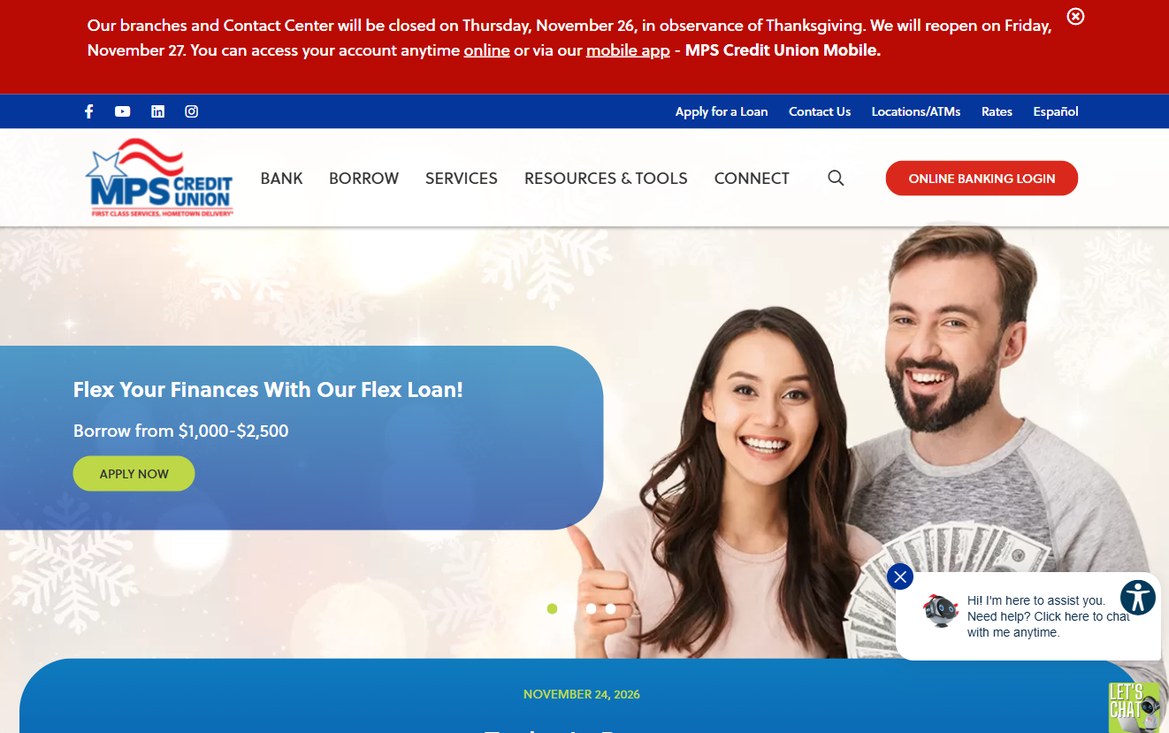
Michigan Schools and Colleges Credit Union is a fantastic option for those who want more specialized, flexible loan products. Their “Flex Loan” is a standout, providing a quick way to borrow between $1,000 and $2,500. This is perfect for a single room’s flooring upgrade, such as replacing the old laminate in a guest bedroom.
It is also great for a small bathroom refresh that requires new tile and grout. The credit union model inherently favors the member, often providing competitive rates because the institution is non-profit. It is a great choice for individuals who want a community-oriented financial partner that prioritizes member benefits over corporate profit margins.
Pros:
- Flexible Flex Loans for smaller, specific amounts.
- Competitive APRs on various loan types.
- Member-focused service model.
Cons:
- Membership requirements may apply.
6. Spring Bank

Spring Bank is a unique entity, operating as a B Corp with a heavy focus on community impact. For the socially conscious borrower, this bank offers a way to fund your home improvements while supporting a different kind of banking model. They have a strong presence in the New York area and cater to those who want their money to fuel local economic growth.
They offer specialized options for nonprofits and small businesses, making them a versatile player. Their approach is deeply rooted in the idea of being a “different kind of bank.” It is an excellent choice for those who prioritize social responsibility and want to ensure their renovation funds are supporting ethical banking practices.
Pros:
- Socially responsible B Corp status.
- Specialized options for nonprofits and small businesses.
- Competitive interest rates for various lending needs.
Cons:
- Geographically focused presence.
Smart Strategies for Financing Flooring Projects
When you are standing in a showroom looking at stone or wood options, it is easy to get carried away by the aesthetics. To maximize your renovation budget, consider a multi-tiered financing strategy. For smaller, immediate needs—like buying adhesive or spacers—a high-limit credit card with a 0% introductory APR period can be incredibly effective.
This allows you to purchase materials immediately and pay them off over several months without incurring interest, provided you stay within the promotional window. However, for the bulk of the project—the heavy-duty materials and professional installation labor—a fixed-rate personal loan is often the safer bet. Unlike a credit card, a personal loan provides a predictable monthly payment.
This predictability is vital when you are also managing other household expenses like groceries or childcare. It allows you to build a “flooring repayment” line item into your budget that won’t change halfway through the project. Another strategy is to look into a Home Equity Line of Credit (HELOC) if you have significant equity in your home.
While a HELOC can be more complex to set up, the interest rates are typically much lower than personal loans. A HELOC acts like a safety net; you only draw from it as you need the money. This is ideal if your renovation hits a snag and you suddenly need an extra $2,000 for unexpected subfloor leveling.
Navigating the Financing Maze
Before you sign any paperwork, look past the shiny surface of the monthly payment. Many people make the mistake of only looking at what they can afford to pay every month, forgetting the total cost over the life of the loan. A lower monthly payment often means a much longer term and much higher interest costs.
For example, a $5,000 loan with a $100 monthly payment sounds great, but if that term is 60 months, you are paying significantly more in interest than a $125 monthly payment over a 42-month term. Another common pitfall is ignoring the fine print regarding fees. Some lenders might offer a low interest rate but charge significant origination fees or prepayment penalties.
Always ask if there is a cost to paying your loan off early. If you get a bonus at work and want to wipe out your flooring debt, you shouldn’t be punished for it. Some lenders bake these costs into the “effective interest rate,” so always ask for the Annual Percentage Rate (APR) rather than just the base interest rate.
Finally, always shop around and compare at least two or three different options. Even if you have a primary bank, a credit union or a specialized lender might offer terms that are significantly better for your specific situation. Taking a little extra time now to run the numbers can save you thousands of dollars in the long run.